
Tampilkan postingan dengan label BACAAN. Tampilkan semua postingan
Tampilkan postingan dengan label BACAAN. Tampilkan semua postingan
The Furnished Room

This is perhaps the bleakest of O. Henry's best-known stories. Although the basic ironic plot can be summarized in a sentence—a young man commits suicide in the same room where a young woman for whom he has vainly searched killed herself—it is the musty atmosphere of the room and the suggestion that every place bears the traces of the lives that have inhabited it that makes the story so compelling. It is a story of transience, of lives that move through a bleak, indifferent world, leaving only bits of themselves, which the young man uncovers as he searches through drawers and pokes into every corner and crevice of the room looking for something that remains of the woman he seeks. However, all that is left is an illusory sweet familiar smell, which melodramatically becomes the sweet smell of the gas he turns on in despair, as she did only one week previously. Although the fact that the young man ends up in the very same room in which his lost sweetheart took her life is one of the most extreme coincidences in all of O. Henry's fiction, the power of the atmosphere of the story is so strong that readers are willing to accept it.
The story ends with two old Dickensian landladies prattling over their beer about the death of a young woman in the room the previous week, which the landlady has kept secret because she did not want to lose the young man's rent. As the young man lies dead upstairs, the ending of the story, with its focus on the mendacity of the old women, reinforces the squalor of the room, further suggesting the unfeeling city that has no room for the romanticism of the two lovers.
download here
The Hound of the Baskervilles
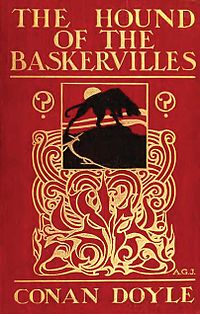
Sir Arthur Conan Doyle wrote this story shortly after returning to his home Undershaw from South Africa, where he had worked as a volunteer physician at the Langman Field Hospital in Bloemfontein.
He was assisted with the plot by a 30-year-old Daily Express journalist called Bertram Fletcher Robinson (1870–1907). His ideas came from the legend of Richard Cabell, which was the fundamental inspiration for the Baskerville tale of a hellish hound and a cursed country squire.
Cabell's tomb can be seen in the Devon town of Buckfastleigh.The legend is as follows:
Squire Richard Cabell lived during the 17th century and was the local squire at Buckfastleigh. He had a passion for hunting and was what in those days was described as a 'monstrously evil man'. He gained this reputation for, amongst other things, immorality and having sold his soul to the Devil. There was also a rumour that he had murdered his wife. On the 5th of July 1677, he died and was laid to rest in 'the sepulchre,' but that was only the beginning of the story. The night of his interment saw a phantom pack of hounds come baying across the moor to howl at his tomb. From that night onwards, he could be found leading the phantom pack across the moor, usually on the anniversary of his death. If the pack were not out hunting, they could be found ranging around his grave howling and shrieking. In an attempt to lay the soul to rest, the villagers built a large building around the tomb, and to be doubly sure a huge slab was placed on top of the grave to stop the ghost of the squire escaping.
Moreover, Devon's folklore includes tales of a fearsome supernatural dog known as the Yeth hound that Conan Doyle may have heard.
Conan Doyle's description of Baskerville Hall was inspired by a visit to Cromer Hall in Norfolk. Some other elements of the story are the product of a stay at the Royal Links Hotel in West Runton, where Conan Doyle first heard the story of Black Shuck—a ghost dog from the Cromer area, which is said to run between Overstrand in the east and East Runton in the west.[2] It is authoritatively noted that Baskerville Hall as first seen by Watson closely resembles the appearance of Conan Doyle's old school, Stonyhurst College in Lancashire, when viewed from its driveway
DOWNLOAD HERE
The Red Badge of Courage

The Red Badge of Courage is an 1895 war novel by American author Stephen Crane. It is considered one of the most influential works in American literature. Of all Crane's works, it has received the most attention from critics. The novel, a depiction on the cruelty of the American Civil War, features a young recruit who overcomes initial fears to become a hero on the battlefield. The book made Crane an international success. Although he was born after the war and had not at the time experienced battle firsthand, the novel is considered an example of American Naturalism.
The story is set during an unnamed battle of the American Civil War which bears numerous parallels to the historical Battle of Chancellorsville. 18-year-old Henry Fleming joins the Union Army despite discouragement from his mother (he has no father mentioned in the book, save that his mother says his father never drank alcohol), and becomes a private in the (fictional) 304th New York Regiment. In the weeks and days leading up to the conflict, Henry muses about whether he'll be brave, or will turn and run. During his first battle, Confederate soldiers charge his regiment, but are repelled. A few minutes later, they regroup and attack again. This time, when Henry sees some other people running and has his own fears that the battle is a lost cause, he deserts his battalion. However, when he gets to the rear of the army, he overhears a general saying that the army won anyway, and realizes he ran for nothing. Ashamed, he spends the rest of the day away from his regiment.
Escaping into a nearby forest, he finds a dead man decaying, alone in a clearing of the woods, and so comes face to face with the horror of death. He flees the forest, and finds a group of injured men returning from battle. One member of the group, the "Tattered Soldier", asks Henry (who is often referred to as "The Youth") where he is wounded, but Henry dodges the question. He also meets one of his friends, Jim Conklin, who has been shot in the side and is suffering dementia from bloodloss. He dies, and Henry runs away from the wounded soldiers.
Next Henry sees a retreating column, and grabs one of the men to try to ask for news. The panicked man hits Henry on the head with his rifle, bruising him. By this point, Henry is tired, hungry, thirsty, and has a head wound, and decides to return to his regiment regardless of his shame. When Henry returns to camp, the other soldiers believe his head injury resulted from a bullet grazing him in battle and care for him.
The next morning Henry goes into battle for the third time. They meet a small group of Confederates, and in the fight Henry proves to be one of the best fighters in the regiment. Afterward, while looking for a stream from which to get water with his friend, he discovers from the commanding officer that his regiment has a lackluster reputation. The officer speaks casually about sacrificing Henry's regiment because they are nothing more than "mule drivers" and "mud diggers". With no other regiments to spare, the general orders his men forward.
In the final battle, Henry acts as the flag carrier. A line of Confederates is hidden behind a fence beyond a clearing, and are able to shoot Henry's regiment with impunity, which is ill-covered in the tree-line. So, facing certain death if they stay, and disgrace if they retreat, the officers order a charge. Henry, unarmed, leads the charge, yet entirely escapes injury. Most of the Confederates at the fence run before the regiment gets there, and of the surviving soldiers, four Confederates are taken prisoner. The overall battle ends, and Henry and his regiment march back to camp.
download here
The Island of Doctor Moreau
When the novel was written in 1896, European society was absorbed with concerns about degeneration, and Britain's scientific community was engulfed by debates on animal vivisection. Interest groups were even formed to tackle the issue: the British Union for the Abolition of Vivisection was formed two years after the publication of the novel.
It begins with the protagonist, an upper class gentleman named Edward Prendick, finding himself shipwrecked in the ocean. A passing ship takes him aboard, and a man named Montgomery revives him. He explains to Prendick that they are bound for an unnamed island where he works, and that the animals aboard the ship are traveling with him. Prendick also meets a grotesque, bestial native named M'ling, who appears to be Montgomery's manservant.
When they arrive on the island, however, both the captain of the ship and Montgomery refuse to take Prendick with them, stranding him between the ship and the island. The crew pushes him back into the lifeboat from which they rescued him. When they see that the ship truly intends to abandon him, the islanders take pity and end up coming back for him. When they arrive at their island, Montgomery introduces Prendick to Doctor Moreau, a cold and precise man who conducts research on the island. After unloading the animals from the boat, they decide to house Prendick in an outer room of the enclosure in which they live. Prendick is exceedingly curious about what exactly Moreau researches on the island, especially after he locks the inner part of the enclosure without explaining why. Prendick suddenly remembers that he has heard of Moreau, and that he had been an eminent physiologist in London before a journalist exposed his gruesome experiments in vivisection.
The next day, Moreau begins working on a puma, and its anguished cries drive Prendick out into the jungle. As he wanders, he comes upon a group of people who seem human but have an unmistakable resemblance to hogs. As he walks back to the enclosure, he suddenly realizes he is being followed. He panics and flees, and, in a desperate attempt at defense, he manages to stun his attacker, a monstrous hybrid of animal and man. When he returns to the enclosure and questions Montgomery, Montgomery refuses to be open with him. After failing to get an explanation, Prendick finally gives in and takes a sleeping draught.
Prendick awakes the next morning with the previous night's activities fresh in his mind. Seeing that the inner door has been left unlocked, he walks in to find a humanoid form lying in bandages on the table before he is ejected by a shocked and angry Moreau. He believes that Moreau has been vivisecting humans and that he is the next test subject. He flees into the jungle, where he meets an Ape Man who takes him to a colony of similarly half-human/half-animal creatures. The leader, a large gray thing named the Sayer of the Law, has him recite a strange litany called the Law that involves prohibitions against bestial behavior and praise for Moreau. Suddenly, Moreau bursts into the colony, and Prendick escapes out the back into the jungle. He makes for the ocean, where he plans to drown himself rather than allow Moreau to experiment on him. Moreau and Montgomery confront him, however, and Moreau explains that the creatures, the Beast Folk, are animals he has vivisected to resemble humans. Prendick goes back to the enclosure, where Moreau explains to him that he has been on the island for eleven years now, striving to make a complete transformation from animal to human. Apparently, his only reason for the pain he inflicts is scientific curiosity. Prendick accepts the explanation as it is and begins life on the island.
One day, as he and Montgomery are walking around the island, they come across a half-eaten rabbit. Eating flesh and tasting blood is one of the strongest prohibitions in the Law, so Montgomery and Moreau become very worried. Moreau calls an assembly of the Beast Men. He identifies the Leopard Man (the same one that chased Prendick the first time he wandered into the jungle) as the transgressor. The Leopard Man flees, but when the group corners him in some undergrowth, Prendick takes pity and shoots him, sparing him a return to the operating table in Moreau's "House of Pain". Prendick also believes that, although the Leopard Man was seen breaking several laws such as drinking water bent down like an animal, chasing men (i.e. Prendick) and running on all fours, the Leopard Man was not responsible for the deaths of the rabbits, but it was the Hyena-Swine, the other most dangerous beast man on the island. He doesn't, however, tell anyone this. Moreau is furious that Prendick killed the Leopard Man but can do nothing about the situation.
As time passes, Prendick begins to deaden himself to the grotesqueness of the Beast Folk. One day, however, he is shaken out of this stagnation when the puma rips free of its restraints and escapes from the lab. Moreau pursues it, but the two end up killing each other. Montgomery falls apart, and having gotten himself quite drunk, decides to share his alcohol with the Beast Men. Prendick tries to stop him, but Montgomery threatens violence and leaves the enclosure alone with bottle in hand. Later in the night, Prendick hears a commotion outside; he rushes out, and sees that Montgomery appears to have been involved in some scuffle with the Beast Folk. He dies in front of Prendick, who is now the last remaining human on the island. After the death, Prendick notices the sky behind him grow brighter and sees that the enclosure is on fire. He realizes that he had knocked over a lamp while rushing out to find Montgomery and that he has no chance of saving any of the provisions stored in the enclosure. He suddenly decides to flee from the island but notices that Montgomery has burnt the only boats, in order to prevent their return to mankind.
He does not attempt to claim Moreau's vacant throne on the island, but he instead settles for living with the Beast Folk as he attempts to build and provision a raft with which he intends to leave the island. He lives on the island for 10 months after the deaths of Moreau and Montgomery. As the time goes by, the Beast Folk increasingly revert to their original animal instincts, beginning to hunt the island's rabbits, returning to walking on all fours, and leaving their shared living areas for the wild. They also gradually cease to follow Prendick's instructions and eventually kill his faithful companion, a Beast-Man created from a dog. Luckily for him, eventually a boat carrying two corpses drifts onto the beach (it is heavily implied that these are the bodies of the captain of the ship that picked Prendick up, and a sailor, due to it being revealed in the book's introduction that said ship sank, and due to one of the corpses having ginger hair). Prendick dumps the bodies, gets supplies, and leaves the next morning.
He is picked up by a ship only three days later, but when he tells his story the crew thinks he is mad. To prevent himself from being declared insane, he pretends to have no memory of the year he spent between the first shipwreck and his final rescue. When he gets back to England, however, he finds that he is rigidly uncomfortable around other humans, because he has an irrational suspicion that they are all Beast Folk in danger of sudden and violent reversion to animalism. He contents himself with solitude and the study of chemistry and astronomy, finding peace above in the heavenly bodies.
DOWNLOAD HERE
The Thirty Nine Steps

Richard Hannay, the protagonist and narrator, an expatriate Scot, returns from a long stay in Southern Africa to his new home, a flat in London. One night he is buttonholed by a stranger, a well-travelled American, who claims to be in fear for his life. The man appears to know of an anarchist plot to destabilise Europe, beginning with a plan to assassinate the Greek Premier, Karolides, during his forthcoming visit to London. He reveals his name to be Franklin P. Scudder. Hannay lets Scudder hide in his flat, and returns later the next day to find that another man has been found shot dead in the same building, apparently a suicide. Four days later Hannay returns home to find Scudder dead with a knife through his heart.
Hannay fears that the murderers will come for him next, but cannot ask the police for help because he is the most likely suspect for the murders. Not only does he want to avoid imprisonment, but he also feels a duty to take up Scudder's cause and save Karolides from the assassination, planned in three weeks' time. He decides to go into hiding in Scotland and then to contact the authorities at the last minute. In order to escape from his flat unseen, he bribes the milkman to lend him his uniform and exits wearing it. Carrying Scudder's pocket-book, he catches a train to Scotland.
Arriving at the countryside somewhere near Galloway, Hannay lodges in a shepherd's cottage. The next morning he reads in a newspaper that the police are looking for him in Scotland. He boards a local train and jumps off between stations. He is seen but escapes, finding an inn where he stays the night. He tells the innkeeper a modified version of his story, and the man is persuaded to shelter him. While staying at the inn, Hannay cracks the substitution cipher used in Scudder's pocket-book. The next day two men arrive at the inn looking for Hannay, but the innkeeper sends them away. When they return later, Hannay steals their car and escapes.
On his way, Hannay reflects on what he has learnt from Scudder's notes. They contradict the story that Scudder first told to him, and mention an enemy group called the Black Stone and the mysterious Thirty-nine Steps. The United Kingdom appears to be in danger of an invasion by Germany and its allies. By this time, Hannay is being pursued by an aeroplane, and a policeman in a remote village has tried to stop him. Trying to avoid an oncoming car, Hannay crashes his own, but the other driver offers to take him home. The man is Sir Harry, a local landowner and prospective politician, although politically very naive. When he learns of Hannay's experience of South Africa, he invites him to address an election meeting that afternoon. Hannay's speech impresses Sir Harry, and Hannay feels able to trust him with his story. Sir Harry writes an introductory letter about Hannay to a relation in the Foreign Office.
Hannay leaves Sir Harry and tries to hide in the countryside, but is spotted by the aeroplane. Soon he spots a group of men on the ground searching for him. Miraculously, he meets a road mender out on the moor, and swaps places with him, sending the workman home. His disguise fools his pursuers, who pass him by. On the same road he meets a rich motorist, whom he recognises from London, and whom he forces to exchange clothes with him and drive him off the moor.
The next day, Hannay manages to stay ahead of the pursuers, and hides in a cottage occupied by an elderly man. Unfortunately, the man turns out to be one of the enemy, and with his accomplices he imprisons Hannay. Fortunately, the room in which Hannay is locked is full of bomb-making materials, which he uses to break out of the cottage, injuring himself in the process.
A day later, Hannay retrieves his possessions from the helpful roadmender and stays for a few days to recover from the explosion, and catches a train to England, to meet Sir Harry's relative at the Foreign Office, Sir Walter Bullivant, at his country home in Berkshire. As they discuss Scudder's notes, Sir Walter receives a phone call to tell him that Karolides has been assassinated.
Sir Walter, now at his house in London, lets Hannay in on some military secrets before releasing him to go home. Hannay is unable to shake off his sense of involvement in important events, and returns to Sir Walter's house where a high-level meeting is in progress. He is just in time to see a man, whom he recognises as one of his former pursuers in Scotland, leaving the house. Hannay warns Sir Walter that the man, ostensibly the First Sea Lord, is about to return to Europe with the information he has obtained from their meeting. At that point, Hannay realises that the phrase "the thirty-nine steps" could refer to the landing-point in England from which the spy is about to set sail. Throughout the night Hannay and the United Kingdom's military leaders try to work out the meaning of the mysterious phrase.
After some reasoning worthy of Sherlock Holmes, and with the help of a knowledgeable coastguard, the group decide on a coastal town in Kent. They find a path down from the cliff that has thirty-nine steps. Just offshore they see a yacht. Posing as fishermen, some of the party visit the yacht, the Ariadne, and find that at least one of the crew appears to be German. The only people onshore are playing tennis by a villa and appear to be English, but they match Scudder's description of the conspirators, The Black Stone. Hannay, alone, confronts the men at the villa. After a struggle, two of the men are captured while the third flees to the yacht, which meanwhile has been seized by the British authorities. The plot is thwarted, and the United Kingdom enters the First World War having kept its military secrets from the enemy.
A few weeks later, Hannay joins the army with a captain's rank.
DOWNLOAD HERE
The Time Machine

The book's protagonist is an English scientist and gentleman inventor living in Richmond, Surrey, identified by a narrator simply as the Time Traveller. The narrator recounts the Traveller's lecture to his weekly dinner guests that time is simply a fourth dimension, and his demonstration of a tabletop model machine for travelling through it. He reveals that he has built a machine capable of carrying a person, and returns at dinner the following week to recount a remarkable tale, becoming the new narrator:
The Time Traveller tests his device with a journey that takes him to the year 802,701 A.D., where he meets the Eloi, a society of small, elegant, androgynous, and childlike people. They live in small communities within large and futuristic yet slowly deteriorating buildings, doing no work and having a frugivorous diet. His efforts to communicate with them are hampered by their lack of curiosity or discipline, and he speculates that they are a peaceful communist society, the result of humanity conquering nature with technology, and subsequently evolving to adapt to an environment in which strength and intellect are no longer advantageous to survival.
Returning to the site where he arrived, the Time Traveller finds his time machine missing, and eventually works out that it has been dragged by some unknown party into a nearby structure with heavy doors, locked from the inside. Later in the dark, he is approached menacingly by the Morlocks, pale, apelike people who live in darkness underground, where he discovers the machinery and industry that makes the above-ground paradise possible. He alters his theory, speculating that the human race has evolved into two species: the leisured classes have become the ineffectual Eloi, and the downtrodden working classes have become the brutish light-fearing Morlocks. Deducing that the Morlocks have taken his time machine, he explores the Morlock tunnels, learning that they feed on the Eloi. His revised analysis is that their relationship is not one of lords and servants but of livestock and ranchers, and with no real challenges facing either species. They have both lost the intelligence and character of Man at its peak.
Meanwhile, he saves an Eloi named Weena from drowning as none of the other Eloi take any notice of her, and they develop an innocently affectionate relationship over the course of several days. He takes Weena with him on an expedition to a distant structure that turns out to be the remains of a museum, where he finds a fresh supply of matches and fashions a crude weapon against Morlocks, whom he fears he must fight to get back his machine. He plans to take Weena back to his own time. But because the long and tiring journey back to Weena's home is too much for them, they are overcome by Morlocks in the night, and Weena faints. The Traveller escapes only when a small fire he had left behind them to distract the Morlocks catches up to them as a forest fire; Weena is lost to the fire and the Morlocks are possibly killed by it.
The Morlocks use the time machine as bait to ensnare the Traveller, not understanding that he will use it to escape. He travels further ahead to roughly 30 million years from his own time. There he sees some of the last living things on a dying Earth, menacing reddish crab-like creatures slowly wandering the blood-red beaches of a world covered in simple vegetation. He continues to make short jumps through time, seeing Earth's rotation gradually cease and the sun grow dimmer, and the world falling silent and freezing as the last degenerate living things die out.
Overwhelmed, he returns to his laboratory, at just three hours after he originally left. Interrupting dinner, he relates his adventures to his disbelieving visitors, producing as evidence two strange flowers Weena had put in his pocket. The original narrator takes over and relates that he returned to the Time Traveller's house the next day, finding him in final preparations for another journey. The Traveler promises to return in half an hour, but three years later, the narrator despairs of ever learning what became of him, although just before he left the lab he saw a glimpse of him.
DOWNLOAD HERE
The Strange Case of Dr Jekyll
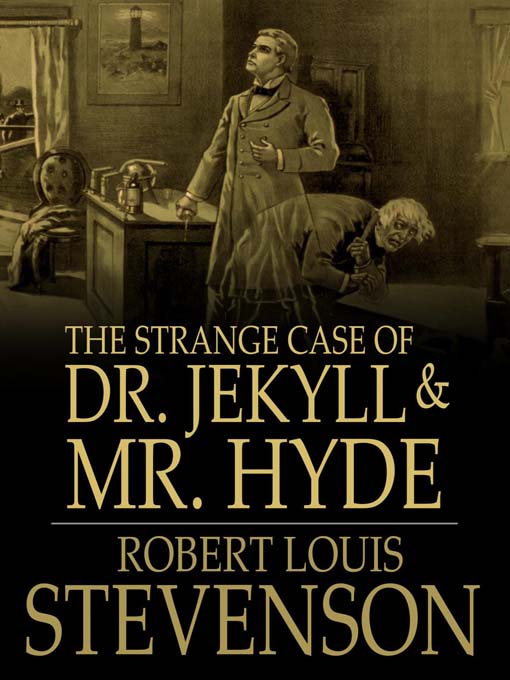
Gabriel John Utterson, a lawyer, is on his weekly walk with his relative Richard Enfield, who proceeds to tell him of an encounter he had some months ago while coming home late at night (it is not known what he was coming home from). The tale describes a sinister figure named Mr Hyde who tramples a young girl, disappears into a door on the street, and re-emerges to pay off her relatives with a cheque signed by a respectable gentleman for 100 pounds. Because both Utterson and Enfield disapprove of gossip, they agree to speak no further of the matter. It happens, however, that one of Utterson’s clients and close friends, Dr Henry Jekyll, has written a will transferring all of his property to this same Mr Hyde. Soon, Utterson begins having dreams in which a faceless figure stalks through a nightmarish version of London. Puzzled, the lawyer visits Jekyll and their mutual friend Dr Hastie Lanyon to try to learn more. Lanyon reports that he no longer sees much of Jekyll, since they had a dispute over the course of Jekyll’s research, which Lanyon calls “unscientific balderdash”. Curious, Utterson stakes out a building that Hyde visits, which, it turns out, is a filthy shack attached to the back of Jekyll’s home.
Encountering Hyde, Utterson is amazed by how ugly the man seems, as if deformed, though Utterson cannot say exactly how this is so. Much to Utterson’s surprise, Hyde willingly offers Utterson his address. Jekyll tells Utterson not to concern himself with the matter of Hyde. A year passes uneventfully. One night, a servant girl witnesses Hyde beat a man to death with a heavy cane - MP Sir Danvers Carew, also a client of Utterson. The police contact Utterson, who suspects Hyde of the murder. He leads the officers to Hyde’s apartment, feeling a sense of foreboding amid the eerie weather (the morning is dark and wreathed in fog). When they arrive at the apartment, the murderer has vanished, but they find half of the cane (described as being made of a strong wood but broken due to the beating) left behind a door. It is revealed to have been given to Jekyll by Utterson. Shortly thereafter, Utterson again visits Jekyll, who now claims to have ended all relations with Hyde. Jekyll shows Utterson a note, allegedly written to Jekyll by Hyde, apologizing for the trouble he has caused him and saying goodbye. That night, however, Utterson’s clerk points out that Hyde’s handwriting bears a remarkable similarity to Jekyll’s own.
For a few months, Jekyll reverts to his former friendly and sociable manner, as if a weight has been lifted from his shoulders. Later, Jekyll suddenly begins to refuse visitors, and Lanyon dies of shock after receiving information relating to Jekyll. Before his death, Lanyon gives Utterson a letter, with instructions that he not open it until after Jekyll's death or disappearance. Utterson goes out walking with Enfield, and they see Jekyll at a window of his laboratory; the three men begin to converse, but a look of horror comes over Jekyll’s face, and he slams the window and disappears. Soon afterward, Jekyll’s butler, Mr Poole, visits Utterson in a state of desperation and explains that Jekyll has secluded himself in his laboratory for several weeks, and that now the voice that comes from the room sounds nothing like the doctor’s. Utterson and Poole travel to Jekyll’s house through empty, windswept, sinister streets; once there, they find the servants huddled together in fear. After arguing for a time, the two of them resolve to break into Jekyll’s laboratory.
Inside, they find the body of Hyde, wearing Jekyll’s clothes and apparently dead by suicide. They find also a letter from Jekyll to Utterson promising to explain the entire mystery. Utterson takes the document home, where first he reads Lanyon’s letter and then Jekyll's. The first reveals that Lanyon’s deterioration and eventual death were caused by the shock of seeing Mr Hyde drink a potion and, as a result of doing so, metamorphose into Dr Jekyll. The second letter explains that Jekyll, seeking to separate his good side from his darker impulses, discovered a way to transform himself periodically into a creature free of conscience, this being Mr Hyde. The transformation was incomplete, however, in that it created a second, evil identity, but did not make the first identity purely good. At first, Jekyll reports, he delighted in becoming Hyde and rejoiced in the moral freedom that the creature possessed. Eventually, however, he found that he was turning into Hyde involuntarily in his sleep, even without taking the potion.
At this point, Jekyll resolved to cease becoming Hyde. One night, however, the urge gripped him too strongly, and after the transformation he immediately rushed out and violently killed Sir Danvers Carew. Horrified, Jekyll tried more adamantly to stop the transformations, and for a time he proved successful by engaging in philanthropic work. At a park, he considers how good a person he has become as a result of his deeds (in comparison to others), believing himself redeemed. However, before he completes his line of thought, he looks down at his hands and realizes that he has suddenly once again become Mr Hyde. This was the first time that an involuntary metamorphosis had happened in waking hours. Far from his laboratory and hunted by the police as a murderer, Hyde needed Lanyon’s help to get his potions and become Jekyll again; when he undertook the transformation in Lanyon’s presence, the shock of the sight instigated Lanyon’s deterioration and death. Meanwhile, Jekyll returned to his home, only to find himself ever more helpless and trapped as the transformations increased in frequency and necessitated even larger doses of potion in order to reverse themselves. It was the onset of one of these spontaneous metamorphoses that caused Jekyll to slam his laboratory window shut in the middle of his conversation with Enfield and Utterson.
Eventually, the potion began to run out, and Jekyll was unable to find a necessary ingredient to make more. Ironically, Jekyll learns that this most necessary ingredient was in the first instance of his experiments, sullied. Subsequent supplies are pure and thus lacking the quality that makes the potion successful for his experiments. His ability to change back from Hyde into Jekyll slowly vanished. Jekyll writes that even as he composes his letter he knows that he will soon become Hyde permanently, and he wonders if Hyde will face execution for his crimes or choose to kill himself. Jekyll notes that, in either case, the end of his letter marks the end of the life of Dr Jekyll. He ends the letter saying "This is the end of Dr Jekyll. Goodbye... Good..." . With these words, both the document and the novel come to a close.
download here
The Last of the Mohicans

The action takes place around Glens Falls in upstate New York. Cora and Alice Monro, daughters of Lieutenant Colonel Munro, are traveling with a column of reinforcements from Fort Edward to Fort William Henry. In the party are David Gamut the singing teacher, and Major Duncan Heyward, the group's military leader.
The Huron scout, Magua, offers to take the Monro party by a shorter route than that which the column must take. Unknown to them, Magua - who they believe to have been expelled from his tribe in disgrace - has been reinstated as chief and is a supporter of the French cause. Magua intends to lead the party into an ambush, but is foiled when they meet Natty Bumppo, also referred to in this novel as Hawkeye, and the two Mohicans, Chingachgook and his son Uncas, on the road. Magua flees, and Bumppo and the Mohicans take the party by canoe to an island at the foot of Glenn Falls, where they are partly hidden by the falling waters.
Magua returns with his Hurons, and steals the canoe containing all the available gunpowder and ammunition. Bumppo and the Mohicans, believing that the Hurons will not kill white captives, escape down the river to fetch help. Magua finds Cora and Alice, and the two men, and lead the captives into the forest. Unnoticed to the Hurons, Cora blazes a trail so that Hawkeye can follow them. Heyward tries to persuade Magua to take them to Fort William Henry. Magua instead offers a choice. He will release the other three if Cora will go with him as his wife. His motive for this is revenge on Munro, rather than attraction to Cora, who refuses him.
When Cora asks about the motive behind his hatred of Munro, Magua tells her that Munro once fed him 'fire-water' (whiskey) leading him to be expelled from the Huron tribe. He subsequently joined the Mohawks and went to war against the Hurons on the British side. Magua became addicted to whiskey and was punished by Munro for drunken behavior; Munro tied him to a post and whipped him. Magua then left the Mohawks to rejoin the Hurons, but has never forgiven Munro for the humiliation. When Cora again refuses Magua's demands he orders his men to tie up and torment the captives. As Heyward struggles with his captors and is about to be killed, a shot from La Longue Carabine (Hawkeye) fells his attacker.
Hawkeye and his companions come out of the woods to attack the Hurons. The Hurons are defeated but Magua again escapes. Heyward and Bumppo lead the Munro women to Fort William Henry, which is by now surrounded by the French. Only Heyward's fluent French allows them to pass the French piquets without detection and gain the fort.
The fort comes under siege. Munro sends Bumppo to Fort Edward to request reinforcements but, bearing General Webb's reply, he is captured by the French, who deliver him to Fort William Henry without the letter. Heyward attempts to parley with the French, but learns nothing. He then returns to Colonel Munro and announces his love for Alice. Munro reveals Cora's heritage - the Colonel's first wife was of mixed race - then gives his permission for Heyward to pay court to Alice.
The French general, Montcalm, invites Munro to a parley. He shows him Webb's letter: the English general has refused to send further reinforcements. Realising that his cause is lost, Munro reluctantly agrees to Montcalm's terms. The British soldiers, together with their wounded, and women and children, are allowed to leave the fort and withdraw. Outside the fort, the column is set upon by 2000 French allied Indian warriors, an action which Montcalm seeks to dissuade but does not attempt to stop by force. In the chaos of the massacre, Magua finds Cora and Alice, and leads them away towards the Huron village. David Gamut follows at a distance.
Three days later, Natty Bumpo and the Mohicans, Heyward and Colonel Munro follow Magua's trail. Outside the Huron village, they come across David Gamut, teaching beavers to sing psalms. The Huron have not killed him as they will not harm a madman. Gamut tells them that Alice is in the village, Cora is in another village belonging to the Lenni Lenape (Delaware) tribe, and Magua has gone moose hunting. Heyward disguises himself as a French medicine man and enters the village with Gamut, intending to rescue Alice. Hawkeye and Uncas set out to rescue Cora. Chingachgook remains with Colonel Munro, who has become somewhat deranged as a result of events.
Heyward's disguise is successful, but before he can find Alice, Uncas is led into the village, having been captured by the Hurons. The Mohican is made to 'run the gauntlet', being struck and insulted, until he reaches a sacred pole in the centre of the village, which acts as a form of sanctuary. Magua returns, and demands that Uncas be put to death, but does not recognise Hayward in his guise as a medicine man. Heyward is asked to cure a sick woman. As he goes to her cave, he is followed by what he believes to be a bear. The Huron believe it is their conjurer, who wears the bearskin in his role as a medicine man. In fact, the occupant of the bearskin is Natty Bumppo, who has overpowered the conjurer and left him tied up elsewhere.
Magua is suspicious and follows the party, but Heyward and Hawkeye overpower him and tie him up. They find Alice in the cave, and bring her out wrapped in blankets, telling everyone that she is the sick woman and they are taking her away from the evil spirits. Outside the camp, Bumppo sends Heyward and Alice off towards the Delaware village, and goes back to rescue Uncas, which he does with the help of David Gamut. Leaving Gamut behind dressed as Uncas, Hawkeye dresses in Gamut's clothes and Uncas wears the bearskin, and the two of them flee to the Delaware village.
The Hurons discover Gamut and realize that Uncas has escaped. Later they find Magua tied up in the cave where the woman is already dead. Magua tells them everything about Hawkeye's and Heyward's deception, enraging the other Hurons, who vow revenge against Hawkeye and his companions and quickly reaffirm Magua as their chief.
Magua then makes his way to the Delaware village, and demands his prisoners. At the council of chiefs, the venerable sage Tamenund is called on to make the final judgement. He asks which of the prisoners is La Longue Carabine, and Heyward claims that it is he, so a shooting match is organised at which Hawkeye outshoots the Major. Tamenund is initially minded to give judgement to Magua, despite Cora's pleas for mercy. Uncas then speaks in a way that the listeners find high-handed, so they tear off his shirt in order to torture him, revealing that he has a sacred sea turtle, totem of the Lenni Lenape, tattooed on his chest.
Realising that he is in the presence of the last descendent of a great chief, Tamenund accedes to all that Uncas asks, except that he says he cannot free Cora as it was Magua who brought her to the village. Magua reluctantly agrees to Uncas's demands but announces his intention to keep Cora as his wife, and leaves the village. According to custom, Tamenund has agreed to give Magua a three hour head start, so Uncas leads them in a ritual dance while they wait. Just as the Delawares are preparing for war, David Gamut enters the village. He has seen Magua take Cora back to the Huron village and hide her in the cave where Alice was hidden. With that in mind, Hawkeye, Uncas, Heyward, and the Delaware warriors set out into the forest to fight the Hurons.
A battle breaks out between the Hurons and the Delaware, who are in three parties - one led by Hawkeye and Heyward, one by Uncas, and one by Chingachgook and Munro. The Hurons are gradually pushed back to their village as the Delawares press their attack with the three parties. Magua escapes with Cora and two of his warriors, and they seek to flee by a mountain path which has a precipitous drop on one side, but Cora stops on a rocky ledge and refuses to go further. Magua threatens to stab her, but is unable or unwilling to go through with his threat. Uncas, who has caught the party up, leaps from a higher ledge but lands flat on his face and is stabbed in the back by Magua. The warrior holding Cora stabs her. Uncas rises to his feet and slays her murderer, and is then killed by Magua. The Huron is finally killed by a shot from La Longue Carabine and falls over the precipice.
The novel concludes with a lengthy account of the funerals of Uncas and Cora. The Lenni Lenape sing that Uncas and Cora will marry in the afterlife. Hawkeye does not believe this, but he renews his friendship with Chingachgook. Tamenund foresees that "The pale-faces are masters of the earth, and the time of the red-men has not yet come again...."
download here
The Scarlet Letter

The story starts during the summer, near 17th century Boston, Massachusetts, in a Puritan village. A young woman, named Hester Prynne, has been led from the town prison with her infant daughter in her arms and on the breast of her gown "a rag of scarlet cloth" that "assumed the shape of a letter." It is the uppercase letter "A." The Scarlet Letter "A" represents the act of adultery that she has committed and it is to be a symbol of her sin—a badge of shame—for all to see. A man, who is elderly and a stranger to the town, enters the crowd and asks another onlooker what's happening. The second man responds by explaining that Hester is being punished for adultery. Hester's husband, who is much older than she, and whose real name is unknown, has sent her ahead to America whilst settling affairs in Europe. However, her husband does not arrive in Boston and the consensus is that he has been lost at sea. It is apparent that, while waiting for her husband, Hester has had an affair, leading to the birth of her daughter. She will not reveal her lover's identity, however, and the scarlet letter, along with her subsequent public shaming, is the punishment for her sin and secrecy. On this day, Hester is led to the town scaffold and harangued by the town fathers, but she again refuses to identify her child's father.[2]
The elderly onlooker is Hester's missing husband, who is now practicing medicine and calling himself Roger Chillingworth. He settles in Boston, intent on revenge. He reveals his true identity to no one but Hester, whom he has sworn to secrecy. Several years pass. Hester supports herself by working as a seamstress, and her daughter, Pearl, grows into a willful, impish child, and is said to be the scarlet letter come to life as both Hester's love and her punishment. Shunned by the community, they live in a small cottage on the outskirts of Boston. Community officials attempt to take Pearl away from Hester, but with the help of Arthur Dimmesdale, an eloquent minister, the mother and daughter manage to stay together. Dimmesdale, however, appears to be wasting away and suffers from mysterious heart trouble, seemingly caused by psychological distress. Chillingworth attaches himself to the ailing minister and eventually moves in with him so that he can provide his patient with round-the-clock care. Chillingworth also suspects that there may be a connection between the minister's torments and Hester's secret, and he begins to test Dimmesdale to see what he can learn. One afternoon, while the minister sleeps, Chillingworth discovers something undescribed to the reader, supposedly an "A" burned into Dimmesdale's chest, which convinces him that his suspicions aredownload here
Moby Dick
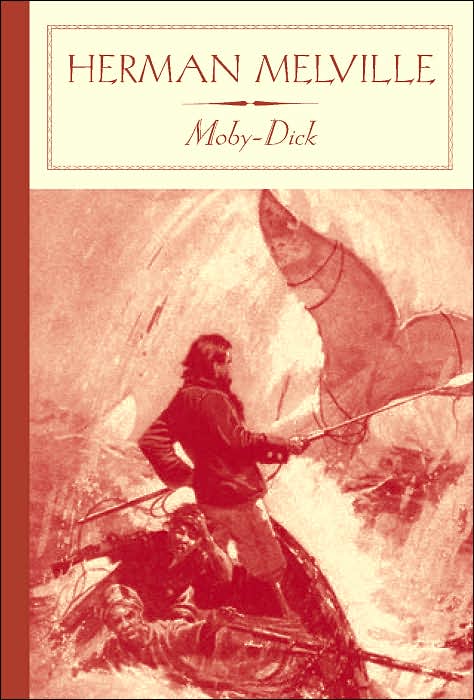
Moby-Dick, also known as The Whale, is a novel first published in 1851 by American author Herman Melville. Moby-Dick is widely considered to be a Great American Novel and a treasure of world literature. The story tells the adventures of the wandering sailor Ishmael, and his voyage on the whaleship Pequod, commanded by Captain Ahab. Ishmael soon learns that Ahab seeks one specific whale, Moby Dick, a ferocious, enigmatic white sperm whale. In a previous encounter, the whale destroyed Ahab's boat and bit off his leg. Ahab intends to take revenge.
In Moby-Dick, Melville employs stylized language, symbolism, and metaphor to explore numerous complex themes. Through the main character's journey, the concepts of class and social status, good and evil, and the existence of gods are all examined as Ishmael speculates upon his personal beliefs and his place in the universe. The narrator's reflections, along with his descriptions of a sailor's life aboard a whaling ship, are woven into the narrative along with Shakespearean literary devices such as stage directions, extended soliloquies and asides. The book portrays insecurity that is still seen today when it comes to non-human beings along with the belief that these beings understand and act like humans. The story is based on the actual events around the whaleship Essex, which was attacked by a sperm whale while at sea and sank.
Moby-Dick has been classified as American Romanticism. It was first published by Richard Bentley in London on October 18, 1851, in an expurgated three-volume edition titled The Whale, and weeks later as a single volume, by New York City publisher Harper and Brothers as Moby-Dick; or, The Whale on November 14, 1851. Although the book initially received mixed reviews, Moby-Dick is now considered part of the Western canon.
download here
Heart of Darkness

Joseph Conrad’s famous novella “Heart of Darkness” is about what happens to a person’s heart, outlook, and character when they are surrounded by dark, unethical, and hopeless environments. It is a story-within-a-story by an unnamed narrator.
The book suggests that a person with a good quality of heart can become trapped, horrorified, and even a facilitator of evil if they allow themselves to remain in poor environments.
The heart of darkness is not necessarily a heart that is sinful by nature or dark at its core. Rather, the best of hearts can become darkened when they reside in environments that are poorly lit, poorly illuminated, or poorly enlightened.
For some people, a key realization is not simply that they should improve the quality of their heart, but in order to do so they may need to improve the quality of their environments (plural).
For many people, one characteristic of an environment that can make it dark is the inability to remove yourself from that one environment. It is not so much that the environment is dark, but rather the inability to ever remove yourself from it could make most any environment darker.
My father has not been very good with some traditional relationship roles. The older I became, the more I realized this was probably because he had experienced the genuinely unique and beautiful characteristics of various intimate environments. And for him, I think at some point he realized his best bet was not to place all his hopes (and that burden) onto one other person to try to create one environment that would meet all their needs. For him, as best I understand him, and I’ve spent my whole life trying to understand him, he reasoned that a better way to live might be living regularly in separate environments at different intervals.
Some artists can paint, draw, or photograph themselves out of their dark places. I have rarely been able to do that.
For me, more often I’ve been able to read, to listen, to think, to write, and to share my way out of dark environments. For me, this blog is a separate environment (a separate world) I’ve created apart from my daily environments. It is a place I go to shine lights against darknesses. However, in the real world, I rarely attempt to similarly shine for others.
It is not true that a person can only be as good as their environment. But it is probably true that our environment can greatly deter the degree, the frequency, and the ways we can be good.
Some artists who realize they are living in dark environments escape into other environments by reading, by submerging into their work, or by acting (the activity of becoming someone different in a different reality). Art for them is not so much ”escapist” as it is a healthy escape. They are creating and inhabiting better worlds than the real worlds that confine them.
For some of us, “darkness” is the absence of a light we once experienced. And no amount of other wonderful lights will remove that memory. When we close our eyes, that visual rememberance often comes to mind.
download here
Oliver Twist

Oliver Twist is the second novel by English author Charles Dickens, published by Richard Bentley in 1838. The story is about an orphan Oliver Twist, who escapes from a workhouse and travels to London where he meets the Artful Dodger, leader of a gang of juvenile pickpockets. Oliver is led to the lair of their elderly criminal trainer Fagin, naively unaware of their unlawful activities.
download here
Agnes Grey
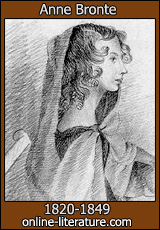
Anne Bronte drew on her own life and work experience as a governess to write this story. She focusses on the detail of life in a manor house set in the moors of England. Anne the heroine is young and idealistic when she starts work as a teacher. And even though she increases her experience, she keeps her sweetness and strength. Patience and virtue are rewarded in the story. This story also shows a quiet but sharp critique and satire of the class life of the times. Bronte's style has been described as gothic but realistic rather than romantic, and similar to Jane Austen.
download here
Aesop's Fables

Aesop's Fables or Aesopica refers to a collection of fables credited to Aesop, a slave and story-teller who lived in ancient Greece between 620 and 560 BC. His fables are some of the most well known in the world. The fables remain a popular choice for moral education of children today. Many stories included in Aesop's Fables, such as The Fox and the Grapes (from which the idiom "sour grapes" derives), The Tortoise and the Hare, The North Wind and the Sun, The Boy Who Cried Wolf and The Ant and the Grasshopper are well-known throughout the world.
Apollonius of Tyana, a 1st century AD philosopher, is recorded as having said about Aesop:
download here
Abbey Church

The Abbey Church
The Ancient Concept of Church as Abbey
The concept we’re building our church celtic-abbey.jpgaround is the old Celtic Christian abbey — a center for worship, refuge, hospitality, learning, art, and community. The ancient abbey embraced its neighbors in adjoining towns and countryside as its parish, and served the needs of the community. The Celtic abbeys were not closed monastic compounds that excluded the outside world; rather, they were open to travelers, neighbors, inquirers, and those seeking help. Every person they encountered did not show up for worship on Sundays, but the witness of the abbey impacted the community it served every day of the week.
download here
A Christmas Carol

A Christmas Carol (full title, A Christmas Carol. In Prose. Being A Ghost Story of Christmas) is a novella by English author Charles Dickens
This book was first published in December 1843 and quickly became a commercial success and won critical acclaim. The story has been credited with returning the holiday to one of merriment and festivity throughout Britain and America. A Christmas Carol remains popular, has never been out of print - it has been adapted to film, opera, and other media.
Ebenezer Scrooge is a miserly, cold, unfeeling, old man who denounces Christmas. In one last attempt to redeem his soul, Scrooge is visited by four ghosts on Christmas Eve seven years after the death of his business partner, Jacob Marley. The ghost of Marley is the first to appear before Scrooge and warns him that his soul will be bearing heavy chains for eternity if he does not change his greedy ways. Marley tells Scrooge he will be visited by 3 more ghosts.
The first, The Ghost of Christmas Past takes Scrooge to the scenes of his boyhood and youth which stir the old skinflint's gentle and tender side. The Ghost of Christmas Present, takes Scrooge to the market with people buying the makings of Christmas dinner and to the family feast of Scrooge's near-impoverished clerk Bob Crachit. The Ghost of Christmas Yet to Come shows Scrooge his impending death.
I'm sure most of you have watched some version of A Christmas Carol on television or at the movies, but you are missing a treat if you have never read the book. Why not check it out this year with your family? It could be the start of a new Christmas tradition for your family.
download here

THE ALCHEMIST

THE ALCHEMIST
The Alchemist (Portuguese: O Alquimista) is an allegorical novel by Paulo Coelho first published in 1988. It has been hailed as a modern classic. The Alchemist was originally written in Portuguese and has since been translated into 67 languages, winning the Guinness World Record for most translated book by a living author. It has sold more than 65 million copies in more than 150 countries, becoming one of the best-selling books in history.
download here
Langganan:
Postingan (Atom)
